
Information Architecture Services
Organise, Structure & Simplify Your Customer Experience
Information Architecture (IA) is the practice of organising, structuring, and labelling content within websites and applications to enhance usability and findability. We create logical, intuitive layouts that help users understand where they are, accomplish their tasks, and navigate effortlessly. Our IA process combines user research, content strategy, and rigorous testing to deliver digital experiences that are not only visually appealing but also functional, scalable, and built to last.
Customer Spotlight - Ibec
/ibec---information-architecture---ia-and-templates.webp?sfvrsn=bb87208f_1)
Project - Information Architecture & Template Design for Ibec
Challenge - Consolidate over 30 individual websites into a single, member-focused global digital experience.
Our Solution - We designed a comprehensive IA strategy, including sitemaps, navigation structures, and content templates, enabling Ibec to deliver a unified, intuitive platform that serves its diverse membership.
Customers we have supported
Our Partners
/aib-logo.webp?sfvrsn=8b9ce8d5_1)


/crh-logo.webp?sfvrsn=3b8dbac4_1)

/ei.webp?sfvrsn=de4dd86d_5)
/epa-logo.webp?sfvrsn=a0c72348_1)

/revenue-commissioners-logo.webp?sfvrsn=b5f73559_1)
/smurfitwestrock-logo.webp?sfvrsn=e91c794a_1)
Why Information Architecture Matters
A strategic approach to Information Architecture provides a foundational advantage across your organisation, transforming complexity into clarity and usability into a competitive edge.
Key Benefits of Information Architecture
- Defined Scope & Requirements - Clearly map content and functional requirements before development begins to reduce ambiguity and rework.
- Enhanced User Experience & Satisfaction - Help users find what they need quickly and intuitively, increasing engagement and loyalty.
- Validated Usability & Findability - Test navigation structures with real users via wireframes and prototypes, ensuring clarity for all audiences.
- Simplified Content Operations - Make updating, maintaining, and scaling content significantly easier and more cost-effective.
- Clear Governance & Ownership - Establish team roles and responsibilities post-launch to ensure long-term sustainability and accountability.
Our Information Architecture Capabilities & Services
We take a research-driven, collaborative approach to IA, ensuring every structure is validated with real users and aligned to your business goals.
Our IA services focus on:
- Content Audits & Inventory - Comprehensive analysis of existing content to identify gaps, redundancies, and opportunities for consolidation.
- Sitemap & Navigation Design - Structuring pages and content hierarchies into clear, intuitive navigation systems (global, local, utility).
- Wireframing & Prototyping - Creating low-to-high fidelity wireframes and clickable prototypes to test structure and flow before build.
- Card Sorting & Tree Testing - Validating categorisation and labelling with real users to ensure findability and logical grouping.
- User Flow & Journey Mapping - Defining optimal paths through your digital product to support key user goals and conversions.
- Content Modelling & Governance - Establishing scalable content types, metadata frameworks, and ownership models for long-term maintainability.
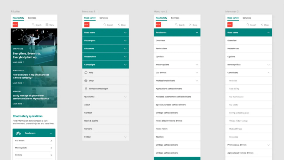
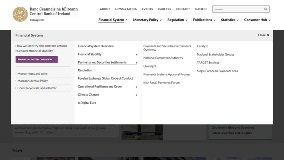
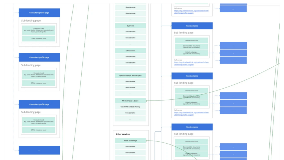
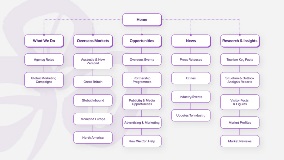
Information Architecture spotlights
/hpra-ia.tmb-.webp)
Let's discuss how Information Architecture can drive growth for your business.
Information Architecture Solutions by Business Function
Our IA services adapt to the unique needs of each department, delivering strategic and operational value across your organisation.
IA aligns digital experiences with business goals, improving customer retention and operational efficiency.
- Increased Customer Retention - Deliver an organised experience that encourages users to return.
- Enhanced Customer Experience - Support positive user journeys that align with strategic objectives.
- Better Decision-Making - Use IA insights to understand user behaviour and inform business strategies.
- Reduced Operational Costs - Save time and resources by optimising content management workflows.
- Improved Market Adaptation - Easily adapt content structures to meet changing business needs and market trends.
IA streamlines workflows, reduces complexity, and supports compliance and cost control.
- Cost-Effective Content Updates - Easily and affordably update content with a well-structured content framework.
- Optimised Resource Allocation - Allocate resources more effectively by understanding content priorities.
- Reduced Complexity - Simplify content management and operations through clear, logical organisation.
- Improved Compliance - Organise information to support data governance and regulatory requirements.
- Streamlined Workflows - Enhance operational efficiency with easy-to-navigate structures for all stakeholders.
IA ensures content reaches the right audiences, drives engagement, and supports campaign integration.
- Targeted Content Delivery - Organise content to reach specific user segments effectively.
- Improved Content Discoverability - Ensure users can easily find marketing assets and resources.
- Optimised User Journey - Guide users to relevant content that supports marketing objectives.
- Increased Dwell Time - Encourage users to stay longer through seamless navigation.
- Better Campaign Integration - Structure content to align with and amplify marketing campaigns.
IA provides a scalable, maintainable framework that simplifies development and system integration.
- Scalable Content Framework - Develop structures that can handle evolving content needs over time.
- Efficient Content Management - Simplify updates and governance with clear organisational systems.
- Better System Integration - Create an architecture that supports seamless integration with other digital platforms.
- Reduced Maintenance Effort - Minimise complex rework by establishing robust IA from the start.
- Improved Site Performance - Support faster load times through optimised content organisation.
Information Architecture - FAQs, Deliverables & Glossary
What is Information Architecture (IA) in UX?
IA is the practice of structuring and organising content within digital products to support usability and findability. It answers the question: “Where am I, where can I go, and how do I get there?”
How is IA different from navigation design?
Navigation is the visible component (menus, links, buttons) that users interact with. IA is the underlying structure and logic that informs the navigation. Good IA makes navigation intuitive.
When should we invest in Information Architecture?
Ideally, at the very start of a website redesign, platform consolidation, or new digital product build. However, IA audits can also diagnose usability issues and improve conversion rates in existing sites.
Do you test IA with real users?
Yes. We use evidence-based methods such as card sorting and tree testing to validate our IA decisions with actual users, ensuring the structure aligns with their mental models.
How do you document and hand off IA deliverables?
We deliver sitemaps, wireframes, content models, and specification documents that are easy for designers, developers, and content authors to understand. We also provide governance recommendations for long-term maintenance.
Can IA improve my SEO?
Indirectly, yes. A clear, logical IA enhances crawlability, internal linking, and user engagement signals (dwell time, lower bounce rates), all of which contribute positively to SEO and search rankings.
| Deliverable | Description | Best Used For |
| Sitemaps | Visual or hierarchical representations of page structure and relationships. | Clarifies scope, supports stakeholder alignment, and guides UX and dev. |
| Wireframes & Prototypes | Low- to high-fidelity layouts of key pages and user flows. | Tests structure early; validates assumptions before visual design. |
| Card Sorting | A user research method where participants group content into categories. | Reveals users' mental models; informs the design of intuitive navigation labels. |
| Tree Testing | A usability method to evaluate the findability of topics in a text-based hierarchy. | Measures effectiveness of IA before build; identifies friction points. |
| Content Audits | Systematic review of existing content inventory for quality, relevance, and gaps. | Uncovers content debt; informs migration and consolidation strategies. |
| User Flow Diagrams | Step-by-step paths users take to complete key tasks. | Optimises conversion funnels; reduces drop-off and frustration. |
| IA Roadmaps | Strategic plans outlining IA phases, milestones, and alignment with delivery timelines. | Aligning UIA activities with business priorities, content strategy and development |
| Content plan | A detailed plan for the content requirements, page by page. | Supporting the team to manage content planning, tracking and completion |
Information Architecture (IA) - The structural design of shared information environments: the art and science of organising and labelling websites, intranets, and online communities to support usability and findability.
Sitemap - A hierarchical diagram showing the structure of a website, including pages, content sections, and their relationships.
Wireframe - A low-fidelity visual representation of a page's layout, content hierarchy, and functionality, stripped of visual design.
Card Sorting - A participatory research technique where user groups group content into categories that make sense to them, used to inform navigation labels and organisation.
Tree Testing - A usability method that evaluates how easily users can find items in a text-based hierarchy, without the influence of visual design.
Content Audit - A systematic review of existing content to assess quality, accuracy, relevance, and performance; often the first step in a redesign or consolidation project.
User Flow - The path a user follows through a website or application to complete a specific task, such as making a purchase or finding information.
Ready to Simplify and Strengthen Your Digital Experience?
Let’s discuss how strategic Information Architecture can reduce complexity, improve user satisfaction, and drive measurable growth for your business.